


Does Being Sick Affect Your Milk Supply? What Breastfeeding and Pumping Moms Should Know
You finally catch the cold that's been making its way through your house, and now you're dealing with a sore throat, congestion, and a whole lot of exhaustion.
As if that wasn't enough, you sit down to pump and notice you're getting less milk than usual.
Naturally, your next thought is: Is being sick making my milk supply drop?
Yes, being sick can sometimes affect your milk supply. But getting sick doesn't automatically mean your supply will decrease, and a few lower-output pumping sessions don't necessarily mean you're producing less milk overall.
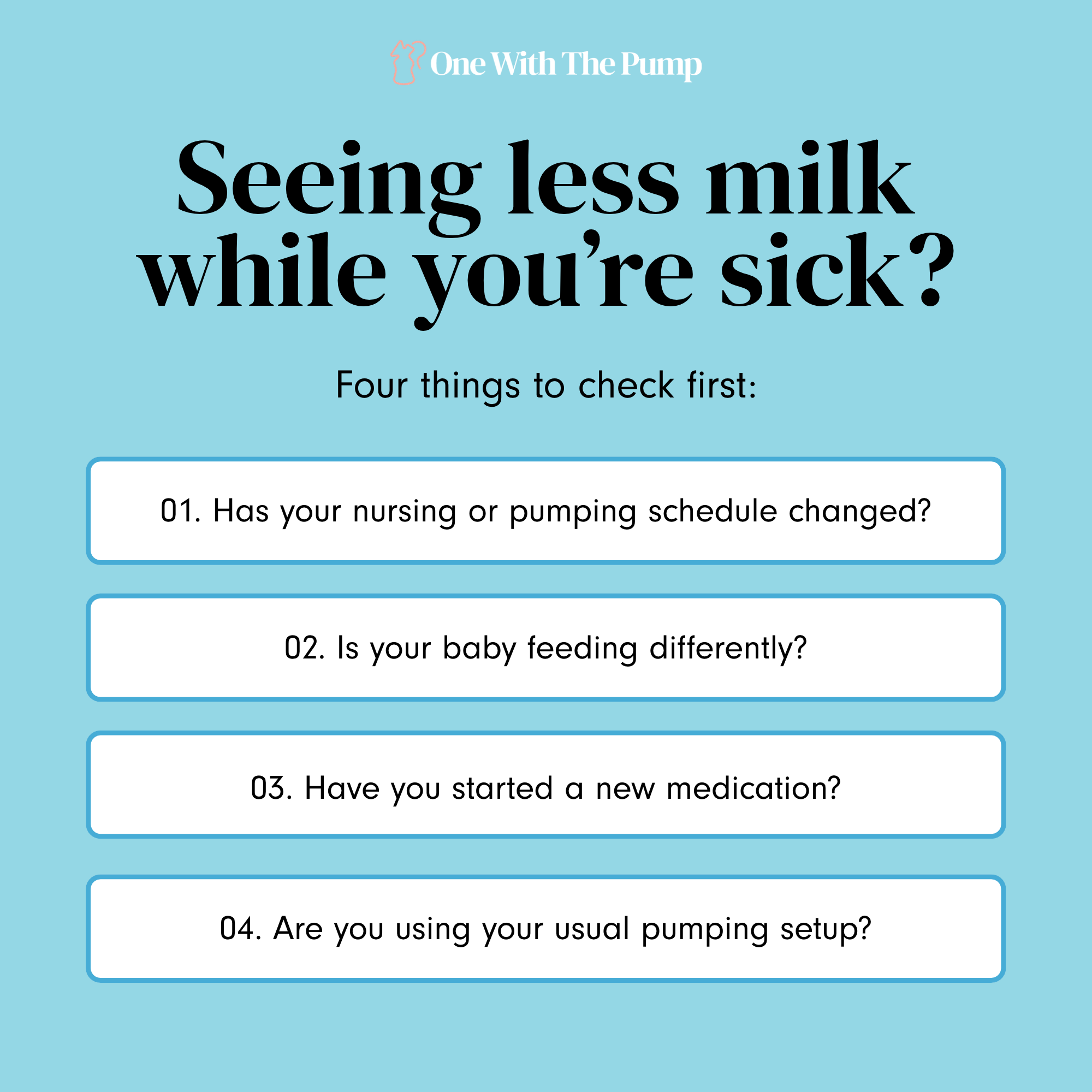
There are several things that can change while you're sick, from how frequently you're removing milk to the medications you're taking.
As a Certified Lactation Counselor, I want you to understand what to look at before assuming your supply is disappearing.
Can Being Sick Cause Your Milk Supply to Drop?
It can.
But that doesn't mean the illness itself is always the only explanation.
When you're sick, your normal feeding or pumping routine might look completely different.
Maybe you slept through a pumping session because you were exhausted. Maybe your baby has been nursing less because they're congested. Or maybe you've started taking cold medicine without realizing one of the ingredients could affect milk production.
All of these details matter.
Rather than immediately reaching for supplements or trying to squeeze in a dozen extra pumping sessions, I recommend looking at what's actually changed.
5 Reasons Your Milk Supply Might Change When You're Sick
1. You're Nursing or Pumping Less Frequently
This is one of the first things I look at when a mom tells me her supply has dropped.
Breast milk production works largely through supply and demand. When milk is removed regularly and effectively, your body receives signals to continue producing it.
When milk removal decreases consistently, production may eventually decrease as well.
The CDC recommends that exclusively pumping moms generally pump as often as their baby drinks breast milk to help maintain supply.
But think about what happens when you're sick.
You might sleep longer than usual, delay a pumping session, or find yourself too exhausted to follow your normal schedule.
If you're nursing, your baby might also feed differently while they're sick.
One missed session doesn't automatically mean you've damaged your milk supply. But a meaningful change in how often or how effectively milk is removed is worth paying attention to.
2. You're Dehydrated or Having Trouble Eating and Drinking
When you're sick, keeping up with your usual food and fluid intake can be difficult.
This is especially true if you're dealing with vomiting, diarrhea, or a fever.
Significant dehydration can affect your health and may contribute to feeding or pumping difficulties.
But here's an important distinction: Drinking extra water beyond what your body needs isn't a proven way to increase milk supply.
You don't need to force yourself to drink enormous amounts of water or chase a particular number of ounces.
Focus on staying adequately hydrated, drinking regularly, and getting medical help if you're unable to keep fluids down.
If you're experiencing severe dehydration, that deserves medical attention regardless of how your pumping output looks.
3. You're Taking Cold Medicine That May Affect Milk Production
This is a big one, especially during cold and flu season.
Some over-the-counter cold medications contain ingredients that can affect milk production.
One example is pseudoephedrine, an oral decongestant found in certain cold and sinus medications.
According to the National Library of Medicine's LactMed database, pseudoephedrine has been associated with decreased milk production.
That doesn't mean every cold medicine will reduce your supply, or that you need to avoid treating your symptoms.
It means you should check the active ingredients before taking medication and speak with your healthcare provider or pharmacist about options appropriate for breastfeeding.
I also recommend being particularly careful with combination cold and flu medications, since one product can contain several active ingredients.
We'll cover this in more detail in our separate article about cold medicine and breastfeeding.
4. Your Baby Is Sick and Nursing Differently
Sometimes it's not your feeding routine that's changed because you're sick.
It's your baby's.
A baby with a stuffy nose, sore throat, or another illness may nurse differently than usual.
They might take shorter feeds, become frustrated at the breast, or need more frequent breaks.
If they're transferring less milk overall, that can affect the amount of milk being removed from your breasts.
And because milk removal helps regulate production, a prolonged change in feeding can eventually affect supply. If you primarily nurse, add a few pumping sessions to signal to your body that you still need that milk.
If your baby isn't feeding well, contact their pediatrician. Fewer wet diapers, unusual sleepiness, or signs of dehydration deserve prompt attention.
5. Your Pumping Sessions Aren't as Effective as Usual
Here's something I want pumping moms to remember:
The amount of milk in your collection bottles doesn't always tell us everything about your milk production.
If you're uncomfortable, rushing through a session, using a different pump, or having trouble with milk letdown, you might collect less milk than usual.
That doesn't automatically mean your body has stopped producing the same amount.
This is also why I don't recommend immediately assuming you need a new supplement or a stronger pump after one disappointing session.
First, look at the bigger picture.
Are you using your usual pump?
Are your flanges fitting comfortably?
Are your pump parts in good condition?
Have your pumping times or session lengths changed?
And is this a consistent pattern, or just one unusual session?
Those answers can tell us much more than a single number.
How to Protect Your Milk Supply While You're Sick
If you're feeling miserable, I don't want you adding unnecessary pressure to your day.
But there are a few practical things you can do to support your milk supply while you're recovering.
Keep Milk Removal as Consistent as You Reasonably Can
If you're nursing, continue offering the breast according to your baby's feeding needs.
If you're exclusively pumping, try to maintain your usual pumping routine as closely as your health allows.
If you're too sick to nurse directly, expressing milk may help you maintain supply while someone else handles feeding your baby.
The goal isn't to pump constantly.
It's to avoid significant, prolonged changes in milk removal when possible.
If you're unable to maintain your normal routine because of illness, a lactation professional can help you develop a realistic plan.
Use Your Most Effective Pumping Setup
If you normally rely on a primary breast pump for most sessions, I recommend sticking with the setup that works best for you.
A wearable pump can be a great convenience, especially when you're juggling life with a baby.
But not every wearable removes milk as effectively for every mom.
If your wearable consistently produces less output than your usual primary pump, it may not be the best option for most sessions while you're already concerned about supply.
And if pumping has suddenly become uncomfortable or less effective, check your flange fit and pump parts before assuming your body is the problem.
Prioritize Rest and Hydration
I know. Easier said than done when you have a baby.
But you need to recover, too.
Keep water nearby, eat what you comfortably can, and ask for help with the tasks someone else can handle.
If another caregiver can wash your pump parts, prepare bottles, or take over diaper changes, let them.
The goal is to make it easier for you to recover while continuing to feed your baby.
Check Medications With a Healthcare Professional
Before taking a new cold or flu medication, review its active ingredients with your healthcare provider or pharmacist.
Be sure to mention that you're breastfeeding, your baby's age, and whether you're already experiencing supply concerns.
Don't assume a medication is automatically appropriate for breastfeeding simply because it's sold over the counter.
And don't stop a prescribed medication without consulting the clinician who prescribed it.
What If Your Milk Supply Has Already Dropped?
First, let's figure out whether you're seeing a true decrease in milk production or a change in pumping output.
For moms who exclusively pump, tracking your total output over several days may be more useful than comparing individual sessions.
For moms who nurse directly, we need to look at how your baby is feeding, their wet diapers, and their weight gain rather than trying to guess how many ounces they're getting.
If you've been pumping less frequently, returning toward your usual effective milk-removal routine may help support production.
If your baby has been nursing less, you may need to express milk to maintain removal while their feeding changes.
And if you're consistently removing less milk despite returning to your normal routine, that's when I would want to look more closely at what's happening.
Should You Add Extra Pumping Sessions?
Not automatically.
The right approach depends on your current supply, your baby's intake, how frequently you're already removing milk, and what caused the change.
Some moms may benefit from adjusting pumping frequency or technique.
Others may need help identifying an issue with milk transfer, flange fit, or equipment.
And sometimes the most important next step is getting medical attention for the illness itself.
I don't recommend adding sessions simply because you had one low-output pump.
How Long Does It Take for Milk Supply to Return After Being Sick?
There's no universal timeline.
Some moms notice that pumping output returns to its usual pattern as they recover and resume their normal feeding schedule.
Others may need additional support, particularly if milk removal was reduced for several days or another issue is affecting production.
The important thing is not to assume that your supply is permanently damaged.
At the same time, I wouldn't promise that every supply decrease will resolve on its own within a certain number of days.
If your output remains consistently below normal, your baby isn't getting enough milk, or you're struggling to reestablish your usual routine, reach out for individualized support.
Does Being Sick Change the Quality of Your Breast Milk?
For most common illnesses, your breast milk remains safe and beneficial for your baby.
Breast milk contains antibodies and other immune components that help support your baby's immune system.
The CDC recommends continuing to provide breast milk during influenza, even if the mother is too sick to nurse directly and needs to express milk instead.
You don't need to automatically pump and dump because you have a cold, flu, or fever.
Of course, certain infections and medical treatments require special precautions, so always discuss specific medical concerns with your healthcare team.
If you're wondering about the safety of breastfeeding during common illnesses, read our related article:
[More Reading - Can You Breastfeed When You're Sick? ]
When Should You Get Help for a Milk Supply Drop?
I always encourage moms to look beyond one pumping session or one difficult day.
But there are situations where you shouldn't wait.
Contact your healthcare provider or a lactation professional if:
- Your pumping output is consistently lower than your usual amount.
- Your baby is nursing significantly less or showing signs they aren't getting enough milk.
- You're experiencing ongoing pain, poor milk removal, or difficulty using your pump.
- You have concerns about a medication and its effect on your milk supply.
- You're struggling to return to your normal feeding or pumping routine after illness.
If your baby has fewer wet diapers, is unusually difficult to wake, or shows signs of dehydration, contact their pediatrician promptly. A fever of 100.4°F (38°C) or higher in a baby younger than 3 months requires immediate medical evaluation.
For yourself, seek prompt medical attention for a significant or persistent fever, severe dehydration, worsening symptoms, or signs of a breast infection.
The Bottom Line: Being Sick Doesn't Automatically Mean Losing Your Milk Supply
Getting sick is frustrating enough without worrying that every pumping session is going to affect your milk production.
And while illness can sometimes be associated with a decrease in supply, it isn't always as simple as “I got sick, so my supply dropped.”
Milk removal, feeding changes, medications, hydration, and pumping effectiveness can all play a role.
My advice?
Pay attention to what's changed, keep nursing or pumping as consistently as you reasonably can, and don't make big changes based on one low-output session.
If you're continuing to see a decrease, it's worth figuring out why rather than guessing your way through it.
Need Help Understanding Your Milk Supply?
If your milk supply has changed and you're not sure what's causing it, individualized support can help you identify what's happening and make a plan that works for your feeding routine.
Inside the One With The Pump Pumping Support Program, we help moms better understand their pumping setup, milk removal, and supply concerns so they can make informed decisions with support.
You can also explore more pumping education and resources on the One With The Pump website.
This article is for educational purposes only and does not replace medical advice. Speak with your healthcare provider about illness, medications, or medical concerns, and contact your baby's pediatrician if you have concerns about feeding or hydration.

