


Can You Breastfeed When You're Sick? What to Know About Colds, Flu, and Fever
You wake up with a sore throat, a stuffy nose, and that unmistakable feeling that you're coming down with something.
And if you're breastfeeding, one of your first questions might be: Can I still nurse my baby, or am I going to get them sick?
The good news? In most cases, you can absolutely continue breastfeeding when you're sick.
Having a cold, the flu, or a fever doesn't automatically mean you need to stop nursing, pump and dump your breast milk, or switch to formula until you're feeling better.
In fact, continuing to provide breast milk while you're sick can have benefits for your baby.
Let's talk about why, which illnesses require extra precautions, and what I recommend doing when you're breastfeeding and feeling absolutely miserable.
Can You Breastfeed With a Cold?
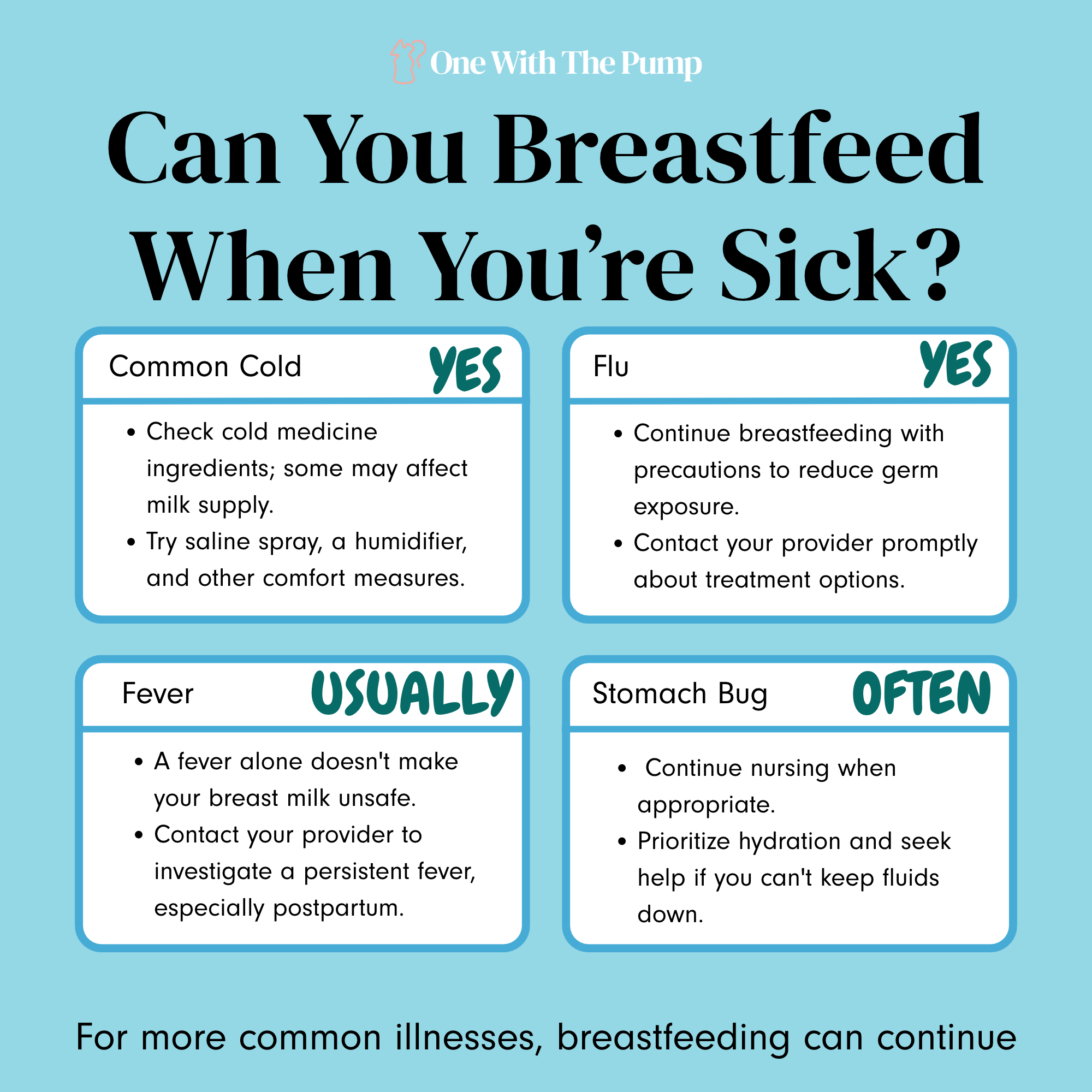
Yes. In most cases, you can continue breastfeeding when you have a common cold.
A runny nose, cough, sore throat, or congestion doesn't mean your breast milk is unsafe.
Common respiratory viruses generally spread through respiratory particles and close contact, rather than through breast milk.
That means the bigger concern isn't the milk itself. It's reducing your baby's exposure to the germs you may spread while coughing, sneezing, or being close to them.
Here's what I recommend:
- Wash your hands before breastfeeding or handling your baby.
- Avoid coughing or sneezing directly toward your baby.
- Consider wearing a well-fitting mask during close contact while you're sick.
- Keep commonly touched surfaces clean.
- Ask someone else to handle non-feeding baby care when possible so you can rest.
You don't need to turn your house into a sterile environment. Just take reasonable precautions while continuing to feed your baby.
And yes, you're still allowed to be annoyed that you somehow caught the cold when you were already running on four hours of sleep.
Can You Breastfeed With the Flu?
Yes. The CDC recommends continuing to provide breast milk when you have influenza.
According to the CDC, the influenza virus is not transmitted through breast milk.
Breast milk also contains antibodies and other immune factors that can help protect your baby from infections.
That doesn't mean your baby can't catch the flu from you. Influenza is contagious, and babies—especially young infants—can be more vulnerable to complications.
But stopping breastfeeding doesn't eliminate the risk of respiratory exposure, and it removes a source of nutrition and immune support.
If you have the flu, take precautions to limit transmission while continuing to breastfeed or provide expressed milk.
If you're too sick to nurse directly, you can pump or hand express and have a healthy caregiver feed your baby when possible.
It's also worth contacting your healthcare provider promptly if you suspect influenza. Antiviral treatment may be appropriate, particularly if you're recently postpartum or at higher risk for complications.
Can You Breastfeed With a Fever?
In most cases, yes.
A fever by itself is not a reason to stop breastfeeding.
A fever is a symptom, not a diagnosis. What matters is what's causing it, how you're feeling, and whether you need medical treatment.
For example, if you have a fever because of a respiratory virus, you can generally continue nursing while taking precautions.
However, don't ignore a fever simply because breastfeeding is usually safe.
If you have a high or persistent fever, severe symptoms, or you're feeling progressively worse, contact your healthcare provider.
And if you're newly postpartum, a fever deserves particular attention because it could indicate an infection that needs treatment.
What if your fever is caused by mastitis?
Mastitis is another situation where moms sometimes worry that their breast milk is unsafe.
In most cases, breastfeeding can continue with mastitis, and suddenly stopping milk removal may create additional problems.
However, mastitis needs appropriate assessment and treatment. If you have breast redness, swelling, significant pain, fever, or flu-like symptoms, contact your healthcare provider.
Don't assume you need to aggressively massage the breast or pump excessively to clear a supposed clog. The Academy of Breastfeeding Medicine's mastitis guidance recommends avoiding aggressive massage and unnecessary extra pumping.
What Happens to Your Breast Milk When You're Sick?
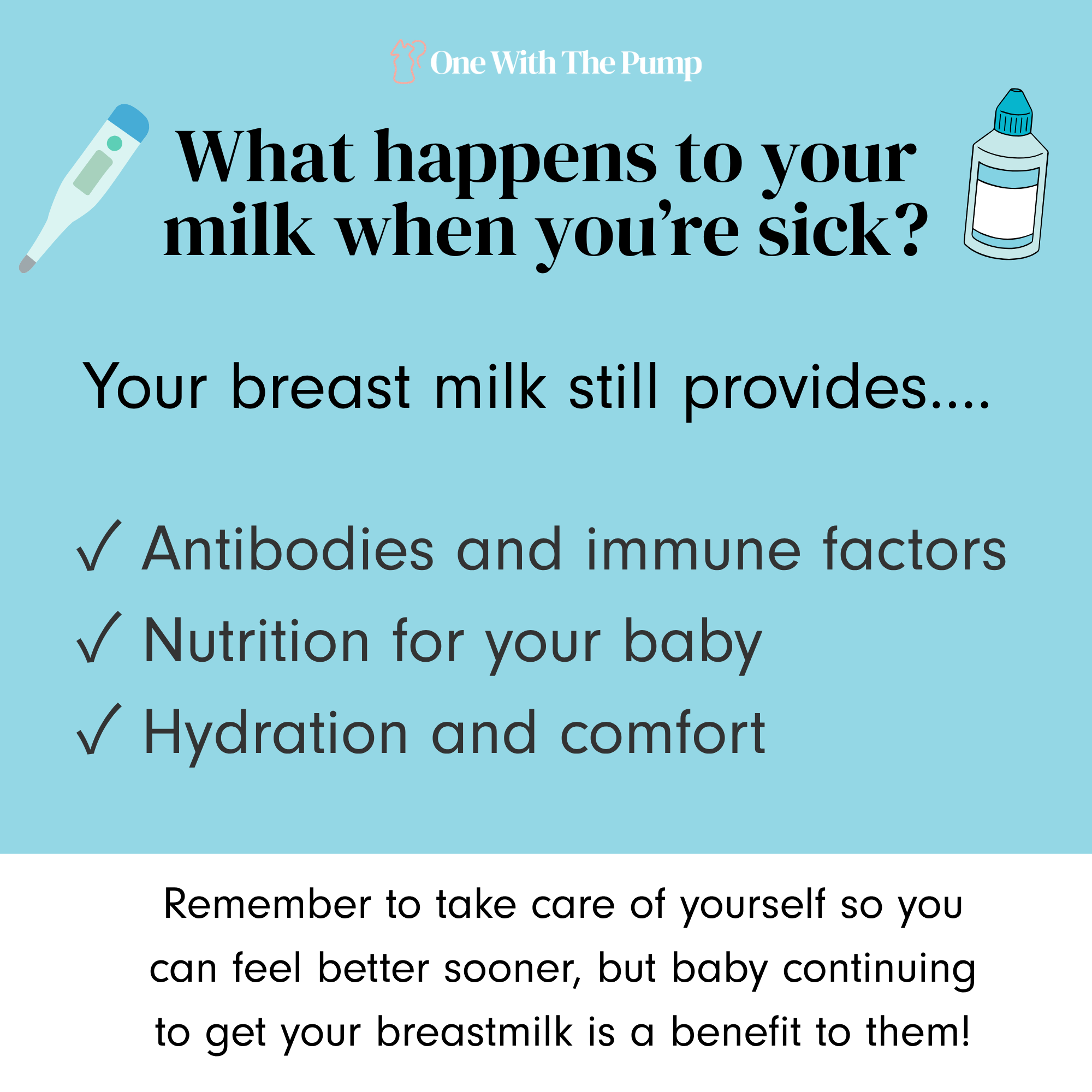
One of the most interesting things about breast milk is that it contains immune components, including antibodies, that help support your baby's developing immune system.
When your body responds to an infection, immune factors in your milk may also reflect that response.
That is one reason breast milk remains valuable when you're sick.
But I want to clarify something important: Breast milk isn't a guarantee that your baby won't get sick.
Your baby may still catch the same virus, particularly if you've been in close contact before you realized you were contagious.
Continuing to breastfeed can still provide important nutrition, hydration, and immune support.
And you don't need to pump extra milk, label it as special “sick milk,” or save it for a future illness to receive those benefits.
If you want to label milk expressed while you're sick for your own organization, that's fine. But there isn't established clinical guidance recommending that you save illness-specific milk to treat a future infection.
What if You Have a Stomach Bug?
In many cases, you can continue breastfeeding if you have vomiting or diarrhea.
For example, the CDC states that mothers with travelers' diarrhea caused by contaminated food or water can continue breastfeeding.
The biggest practical concern is often dehydration.
If you're vomiting, experiencing diarrhea, or struggling to drink enough fluids, you may have a harder time maintaining your normal feeding and pumping routine.
Try to drink fluids regularly, use an appropriate oral rehydration solution if needed, and seek medical care if you cannot keep fluids down or develop signs of dehydration.
Not every gastrointestinal illness is identical, so check with your healthcare provider if you have severe symptoms, a specific diagnosed infection, or concerns about medication.
Can Being Sick Affect Your Milk Supply?
It can, but that doesn't mean getting sick automatically causes your milk supply to disappear.
When moms tell me their supply dropped while they were sick, one of the first things I want to understand is what changed during those few days.
Were you nursing or pumping less frequently because you felt terrible?
Were you struggling to stay hydrated?
Did your baby nurse differently because they were sick, too?
Did you start taking a new medication?
Illness can sometimes coincide with a temporary decrease in milk production or pumping output, but we need to understand the circumstances before assuming there's a supply problem.
If you're feeling well enough, continue nursing according to your baby's feeding needs or maintain your usual pumping routine as closely as you reasonably can.
And if you're seeing a persistent decrease in output, or your baby isn't feeding or gaining weight appropriately, that's worth investigating.
What Cold Medicine Can You Take While Breastfeeding?
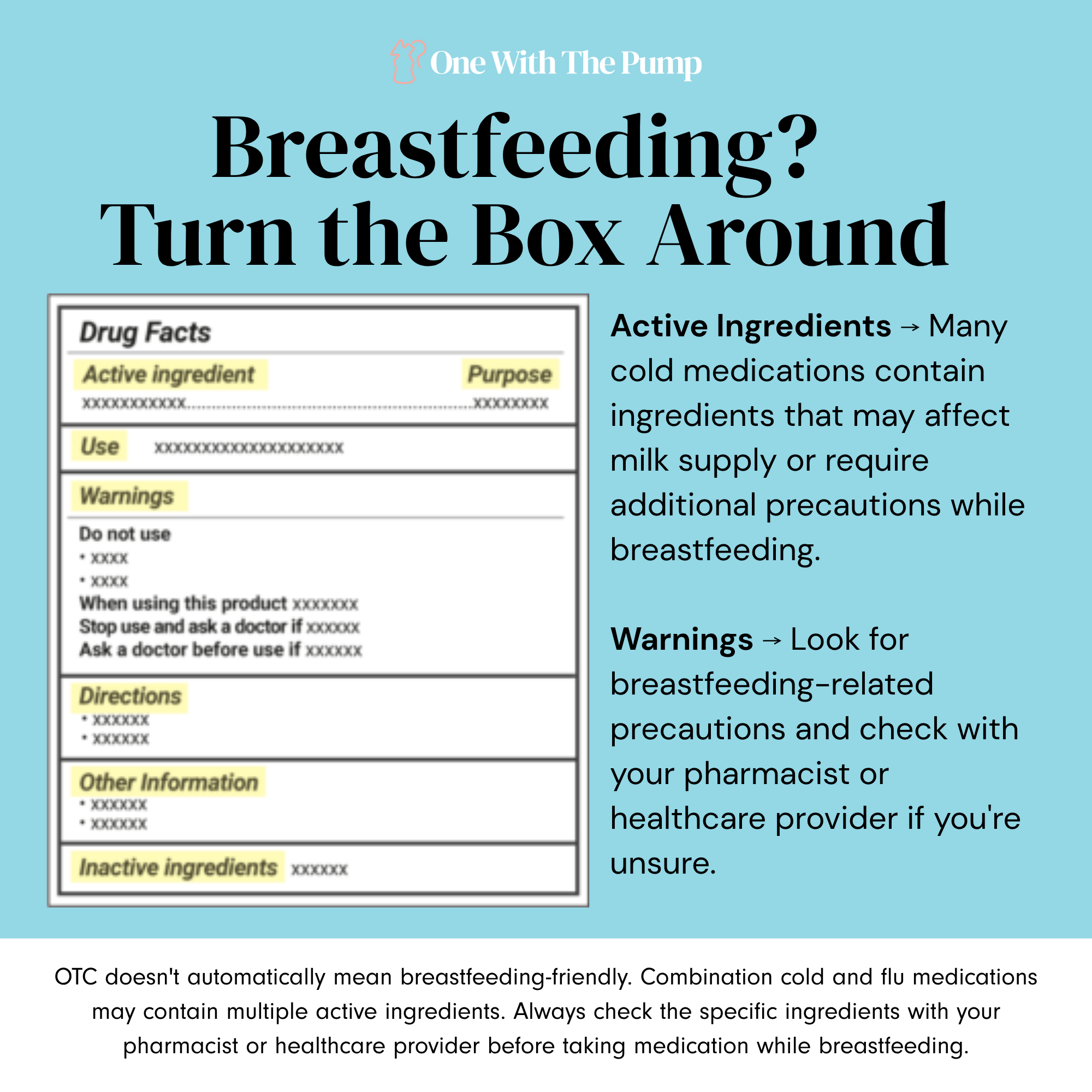
This is where I want you to pay attention to the active ingredients, not just the name on the front of the box.
Some cold and flu medications are compatible with breastfeeding, while others may require caution because of potential effects on your baby or milk supply.
For example, LactMed reports that pseudoephedrine has been associated with reduced milk production.
But that doesn't mean you need to avoid every medication or suffer through your illness without relief.
A few practical steps:
- Check the active ingredients in every medication, particularly combination cold-and-flu products.
- Tell your healthcare provider or pharmacist that you're breastfeeding.
- Mention your baby's age, especially if they're premature or medically vulnerable.
- Ask about medications that address your specific symptoms rather than taking multiple ingredients you may not need.
- Don't stop breastfeeding or discard milk solely because you've taken a medication without checking whether that's necessary.
The National Library of Medicine's LactMed database is an excellent resource for information about individual medications during lactation.
You can also try simple comfort measures such as saline nasal spray, a clean humidifier, warm tea, or honey for your own sore throat. Remember that honey should never be given to babies under 12 months.
Medication safety deserves its own conversation because the specific drug, dose, and your baby's circumstances matter.
What if You're Too Sick to Breastfeed?
Sometimes the question isn't whether you're allowed to breastfeed.
It's whether you physically have the energy.
If you're dealing with a fever, body aches, exhaustion, or a stomach bug, sitting through feeds or pumping sessions might feel overwhelming.
If you can nurse comfortably, continue.
If you're too sick to nurse directly, consider expressing milk and having another caregiver handle the feeding.
If you're exclusively pumping, try to maintain milk removal as consistently as your health allows, but don't ignore symptoms that require rest or medical care.
A few things that can make sick days easier:
- Keep water, snacks, tissues, and your usual feeding supplies within reach.
- Ask your partner or another caregiver to handle diaper changes, washing pump parts, and other tasks.
- Use previously expressed milk if you need additional flexibility.
- Keep an eye on your normal feeding or pumping patterns, without obsessing over every ounce.
And please, delegate the dishes if you can.
You do not get bonus points for washing duckbills with a fever.
Are There Times When You Shouldn't Breastfeed While Sick?
Yes, but these situations are much less common than an ordinary cold or flu.
Certain infections, medications, or medical treatments may require temporarily avoiding direct breastfeeding, withholding expressed milk, or stopping breastfeeding.
For example, specific precautions apply to untreated active tuberculosis, certain breast lesions caused by herpes simplex virus, and some other serious infections.
The recommendations differ depending on the condition. In some cases, expressed milk can still be given even when direct breastfeeding is temporarily restricted.
If you've been diagnosed with an unusual or serious infection, or you're receiving a medication that may not be compatible with breastfeeding, ask your healthcare team for individualized guidance.
You can review the CDC's guidance on contraindications to breastfeeding for more information.
When Should You Call a Doctor?
Most common illnesses don't require stopping breastfeeding, but they can still require medical attention.
Contact your healthcare provider if you have a persistent or worsening fever, difficulty staying hydrated, severe breast pain or redness, or symptoms that are getting worse instead of better.
Seek urgent medical care for serious symptoms such as difficulty breathing, chest pain, confusion, or signs of severe dehydration.
And keep an eye on your baby, too.
If your baby is feeding significantly less, producing fewer wet diapers than usual, unusually difficult to wake, or showing signs of dehydration, contact their pediatrician promptly.
A baby younger than 3 months with a temperature of 100.4°F (38°C) or higher needs immediate medical evaluation. Breathing difficulties or other emergency symptoms also require immediate care.
The Bottom Line: You Can Usually Keep Breastfeeding When You're Sick
If you've caught the cold your toddler brought home, you're dealing with the flu, or you've woken up with a fever, your first instinct might be to worry about whether breastfeeding is still safe.
But for most common illnesses, continuing to breastfeed is recommended.
Your breast milk remains an important source of nutrition and immune support for your baby, even when you're not feeling your best.
Focus on appropriate hygiene precautions, taking care of yourself, and keeping feeding or milk removal reasonably consistent.
And remember, you don't need to stop breastfeeding just because you're sick.
More Breastfeeding and Pumping Resources
For additional pumping and breastfeeding education, including milk supply, pump recommendations, and practical resources, visit my recommended products and resources page.
If illness has disrupted your feeding routine and you're experiencing ongoing milk supply concerns, individualized lactation support can help you understand what's happening.
Learn more about the One With The Pump Pumping Support Program.
This article is for educational purposes and does not replace individualized medical advice. If you have questions about a specific illness, medication, or your baby's health, consult your healthcare provider.

