


What Google Can't Tell You About Your Milk Supply
If you're googling "how to increase milk supply" at 3 a.m., I need you to know something:
You're not doing anything wrong.
You just pumped for 30 minutes and got an ounce. You're worried. So you search. That's what every mom does.
Twenty tabs later, you've got power pumping, lactation cookies, more water, a new pump, a different flange, and a forum post telling you it's probably too late. ChatGPT gave you a tidy list of ten things to try.
None of it tells you which one you actually need.
The Internet Is Great at the Basics
Honestly? Some of it is really helpful.
- Comparing pumps, parts, and bottle washers
- Knowing you're not the only one up at 3 a.m.
The problem starts when a general answer turns into your personal plan.
Low Supply Almost Never Has Just One Cause
When I work with a mom, I look at the whole picture:
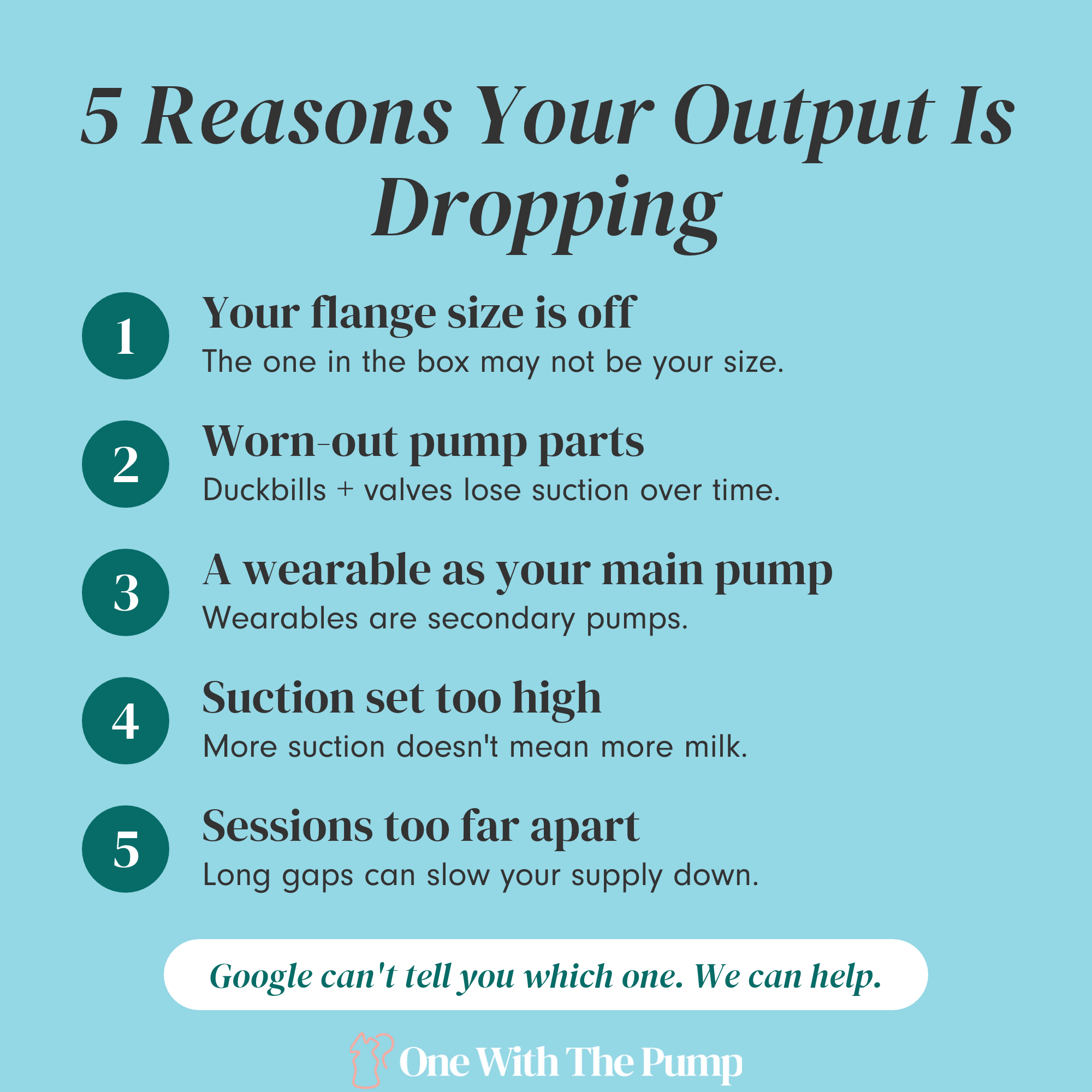
- Your flange size. Not the one that came in the box.
- Your pump and settings. Is it actually emptying you?
- Your schedule. Including the session you keep skipping.
- Primary vs. wearable. Which one you're using for most of your sessions.
- What changed lately. Back to work, a cold, a new pump, baby sleeping longer.
- Your goal. A freezer stash, exclusive pumping, or making it to six months.
Two moms can type the exact same question and need completely opposite answers.
One needs more sessions. The other needs a different flange and fewer, better sessions.
A search result can't tell them apart.
Common Advice That Can Backfire
None of these are always wrong. They're just the wrong fix for a lot of moms.
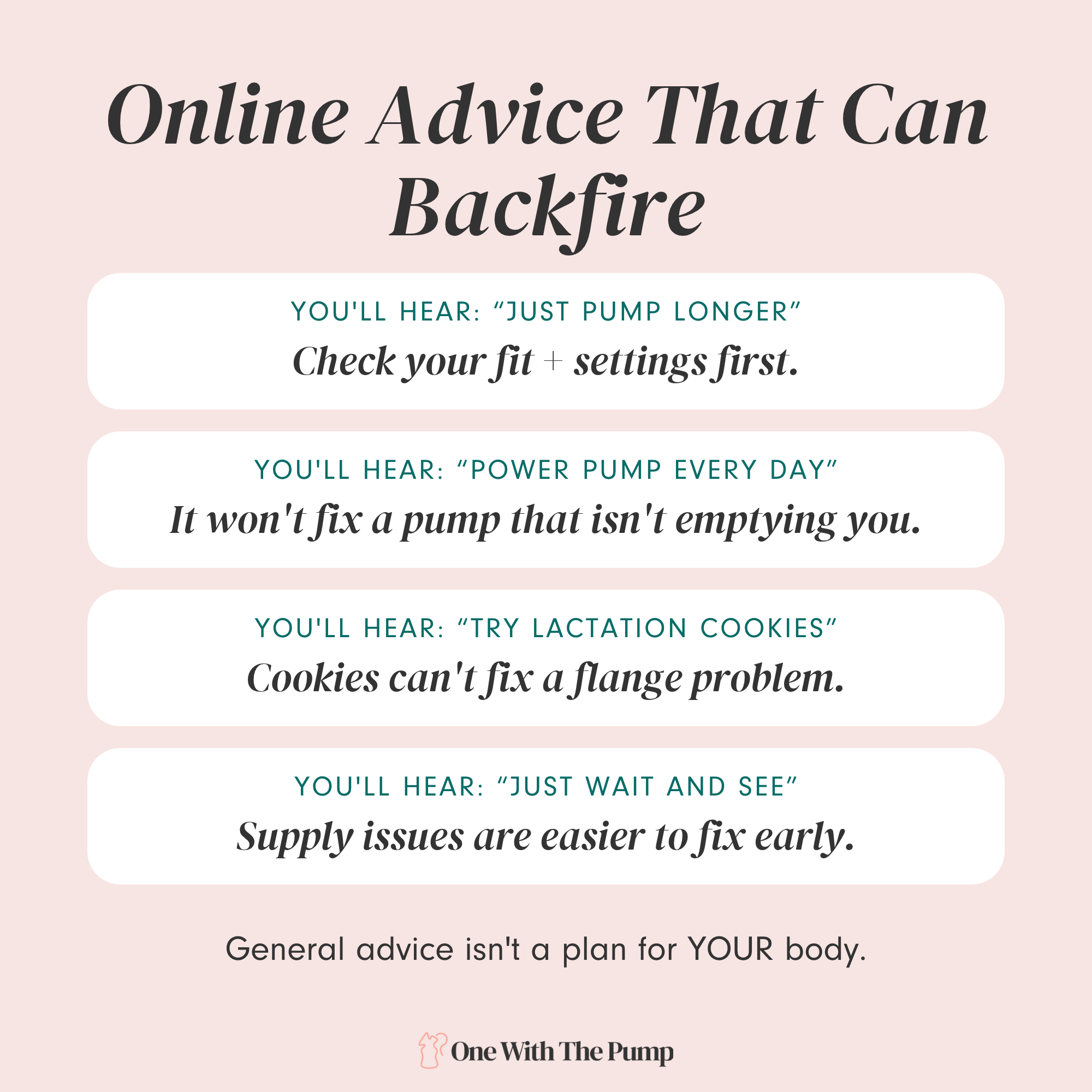
"Just pump longer." If your flange or settings are off, more time usually means more pain. Not more milk.
"Turn the suction up." More suction does NOT mean more milk.
"Power pump every day." It can help some moms. But it won't fix a pump that isn't emptying you, and it can burn you out fast.
"Drink more water." Staying hydrated matters. Extra water alone rarely fixes low supply.
"Try lactation cookies." Cookies don't fix a flange problem. And please talk to your doctor or IBCLC before starting any supplement.
"Your wearable is all you need." Wearables are secondary pumps. If yours isn't emptying you, here's why.
"Give it time and see what happens." This is NOT the time to wait. Supply issues are usually easier to fix the earlier you catch them.
Want more of these? I break down the biggest ones in What Nobody Tells You About Pumping.
How To Use Online Info Without Losing Your Mind
Keep searching if it helps you. Just use it like this:
- Treat it as background, not a plan.
- Change one thing at a time. Try five tips at once and you'll never know which one worked.
- Track your output for a few days before and after any change.
- Check who wrote it. A lactation professional, not a random forum or an AI summary.
- Get help when it's not working. If you've tried things for a week or two and nothing's changed, that's your sign.
When It's Time To Get Real Support
Reach out for help if:
- Your output dropped and you can't figure out why
- Pumping hurts, or you don't feel empty after a session
- You've tried everything online and nothing has changed
- You feel like you're pumping all day for very little milk
If you have pain, a fever, a hard or red spot on your breast, or you're worried about your baby's weight, call your doctor or an IBCLC first.
Google doesn't know your milk supply. We do.
We look at your pump, your schedule, and your goals, and build a plan that actually fits you. See exactly how we help moms work through this.
You're not bad at pumping. You just need advice that's actually about you.

